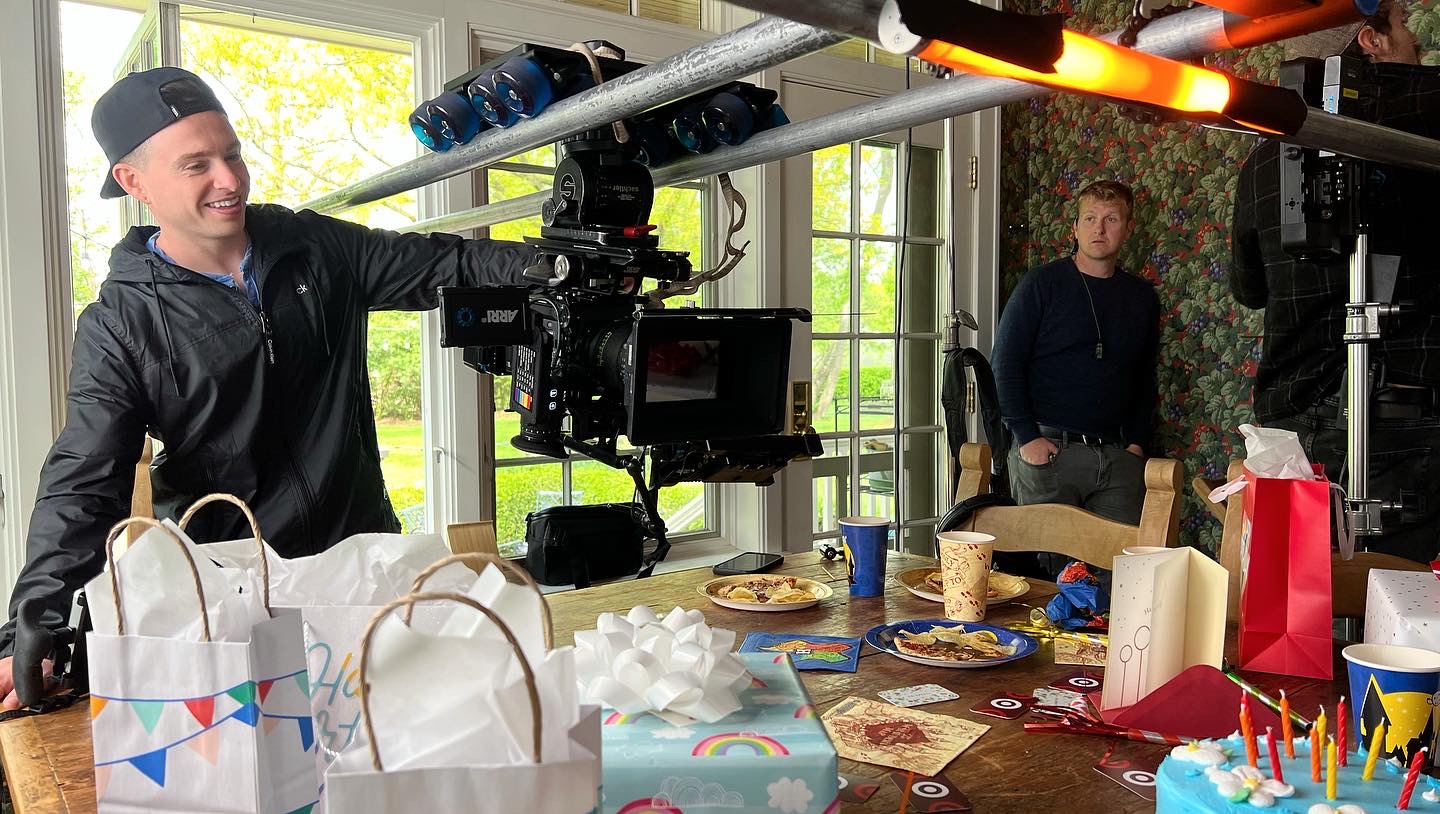
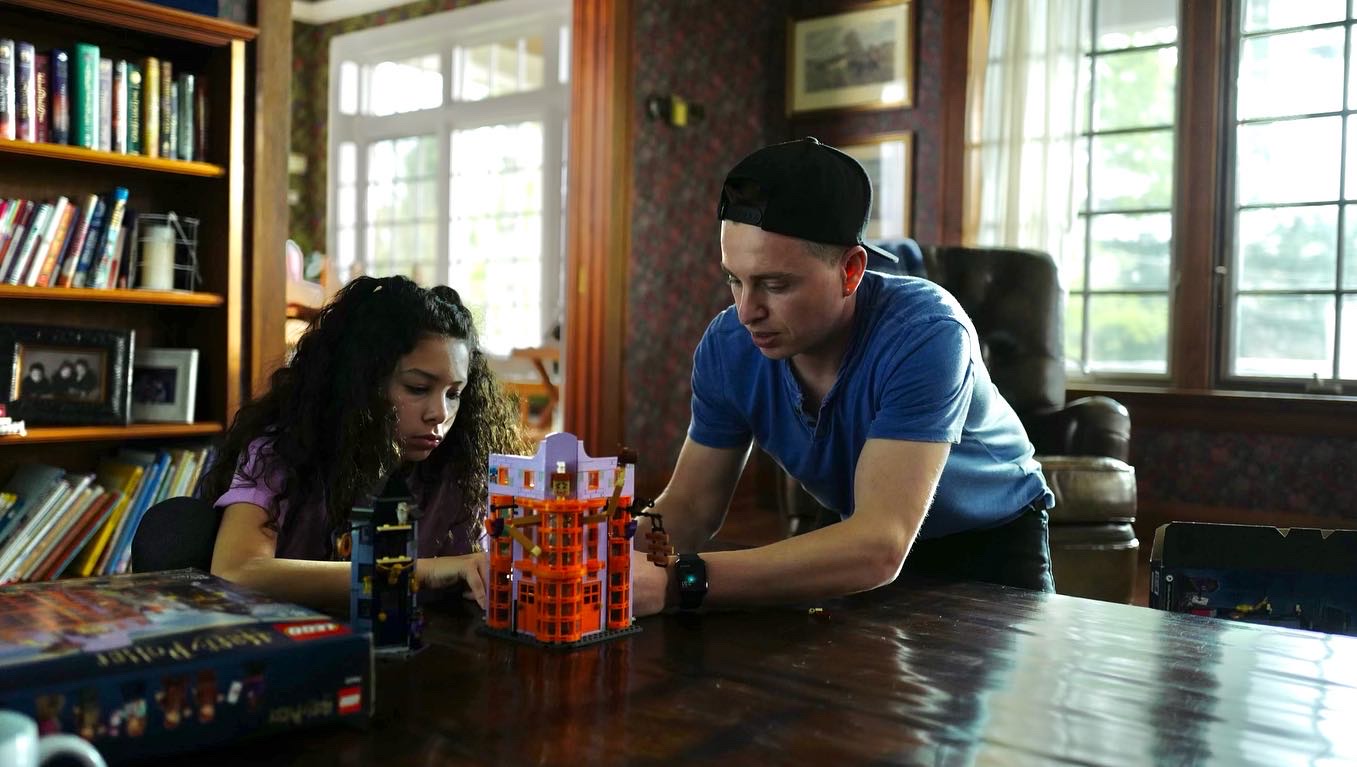
What started from being a highschooler filming skateboarding videos in the 2000s turned into a full-time career for Cincinnati-based commercial and film director Zach Daulton.
“We did not have phones and everything back then, so we had to get our parents’ camcorders to film,” Daulton told Spark.
Daulton is now a successful filmmaker who has worked with companies like Lego and Warner Brothers to create advertisements and short films that tell a story.
From the time Daulton made his first skateboarding video with his friends to his most recent commercial, he has experienced a tumultuous era in the film industry with the rise of streaming services.
According to Statista, a blah blah blah source, box-office sales in the U.S. and Canada were on the rise until a peak in 2002 where ticket sales reached 1,575.92 million. After that point, ticket sales gradually decreased until 2020 which saw sales drop from 1,225.56 million to 219.99 million.
Movie theater ticket sales seemed to rebound in 2023 with 939.63 million tickets sold, but have continued to fluctuate at a lower average than sales prior to 2020, with ticket sales in 2024 totaling 760.48 million.
According to Daulton, COVID may have assisted the rise of streaming services over movies in theaters.
Rewind/Recap
Going to the movie theater has been a staple of popular culture for decades. In the early days of the film industry, A-list stars would draw people into the theater according to Miami Professor of Media Communications and Film Studies Dr. Andrew Rice.
However, the culture around measuring studio success changed to be based around sequels and franchising, famously marked by the release of the first Star Wars film in 1977.
“[The first Star Wars] went over budget considerably, but that film made a lot of money, and beyond that, the toys made a lot of money,” Rice told Spark. “They sold a lot of records of the soundtrack to kids that had seen it and were obsessed with it, and just wanted to be with it somehow.”
As tastes and technology changed from silent films to blockbusters, one thing stayed relatively constant: the movie theater was a strongly popular choice of past time in the U.S.
However, in 1998, Netflix began mailing rented DVDs to subscribers which allowed them to rent movies through the internet without having to go to a brick and mortar DVD rental store. Nine years later, the company launched their streaming service in 2007, according to the Netflix website.
“Netflix surprised a lot of the major studios by the speed with which it grew, and initially, by its willingness to pay licensing fees for online streaming services,” said Rice.
Netflix eventually switched to solely providing streaming services and mailed its last DVD on Sept. 29, 2023.
According to Rice, Netflix led to other companies joining and competing in the streaming market which led to the “golden age of television,” in the 2010s.
“Netflix and then the new competitors, like Amazon Prime and Hulu, were all paying for their own content to be made because they wanted to control the really good content and they wanted to win awards,” said Rice. “They were throwing gobs of money at new shows; these were [shows like] ‘Breaking Bad,’ ‘The Sopranos,’ [and] ‘The Wire’ on HBO.”
Daulton noticed this trend as well, calling it “the streaming wars.”
“When Netflix became what was perceived as a threat to everybody, every company decided that they all needed to start their own streaming services,” Daulton told Spark. “There started a gold rush of content creation, film production, and series production where these companies were dumping billions of dollars into making all of this stuff.”
However, experts like Daulton speculate that this era of established and newly founded companies producing original content for their respective streaming platforms will not last forever.
Business
According to Daulton, subscription-based streaming services make a majority of their revenue off of subscriptions, not necessarily based on what viewers watch or how often they watch it.
As the cost of producing original content began to rise and subscription revenue began to dwindle, some streaming companies turned to advertisements.
Netflix began as a “commercial-free” service, meaning that the platform was ad-free. In 2022, the company introduced a “basic with ads” subscription for a lower price.
Many streaming services like Hulu and Paramount+ also started out without advertisements in their programming but quickly switched to having multiple subscription options of varying prices and advertisement status.
“[Streaming services] have a subscriber fee that does not change month to month, so viewers can watch 100 hours or one hour and unless [the company] is selling ads, it does not really matter,” said Daulton.
Professor Rice and director Daulton do not necessarily believe that thriving streaming services will go away too soon however, especially those that are mainly centered around showing content that has already been made.
“Netflix and Disney are very healthy businesses right now; lots and lots of people watch the stuff that is on those channels,” said Rice. “They know what they are doing, so I do not think they are going to go away.”
According to a study done in July of 2025 by Pew Research Center, 8% of adults in the U.S. only use cable or satellite TV services, with 55% only using streaming, and 28% using both.
One way that studios are able to profit is by producing content that is based on pre-existing intellectual property like the Star Wars or the Hunger Games franchises, according to Daulton.
This is because these franchises have big fan bases that will not only buy tickets to see the movies, but also buy the merchandise associated with the films and shows.
This may have caused studios to move away from stand-alone, creative projects in favor of movies and shows based around an existing fan-base.
“[Streaming services] are going to try to double down on and make more seasons, make more sequels, and spread that out through merchandising so that they can have that billion dollar movie that can fund their whole slate for a year or two,” said Daulton.
Directors have begun to overtly nod to fans in some of the franchised movies, according to Daulton.
“With the amount of ‘wink-wink’ at fans inside of the film and series fanbases, if you came into it cold, you would not [understand] half of the [content] that is presented to you,” said Daulton, “but if you are invested in it, it is like a little reward to you for being invested, because you get an inside joke.”
Remakes
Remakes have been around for decades, with each generation wanting to recapture the nostalgia they had for their favorite films according to Joe Porter, the owner and director of Innovatory Films, a documentary film company based in Cincinnati.
According to Arizona State University Film School Teaching Professor Dr. Joe Fortunato, remakes are especially common when the film industry goes through a period of change.
“The arrival of sound, the shift to color, the home-video boom, and now the rise of streaming all encouraged studios to refresh familiar stories for new audiences,” Fortunado told Spark.
According to Fortunado, remakes are not inherently “lazy,” but rather that it depends on the filmmakers to revitalize an old movie by bringing a new artistic perspective.
“Remakes can actually help [the original film]. A remake often pushes people to discover, or rediscover, the original film,” said Fortunado. “But, if a remake is poorly done or becomes more famous [than the original,] it can overshadow the earlier work and distort how people remember it.”
Porter agrees that remakes are not necessarily less creative than the original projects.
“Every film and piece of art is derivative; nothing is created in a vacuum,” Porter told Spark. “Just because it has the same name, characters, or world doesn’t mean it is less creative.”
However, according to Rotten Tomatoes, a website where movie viewers can rate movies, remakes average an enjoyment rating of 47% while the originals average a 81% enjoyment rate.
Porter attributes varying opinions on individual remakes to the high opinion and nostalgia viewers had of the original.
“I think we attach emotionally to some of these characters and stories that maybe we experienced when we were younger,” said Porter. “So, when a remake comes out that changes it in any way, it feels offensive. Or, we hold it to such an impossibly high standard that it lets us down because a remake will never capture the same magic as the original.”
Regardless of online discourse and audience reviews of remakes, intellectual property attached to existing movies and TV shows make remakes an attractive prospect for studios looking to make money.
“Studios face massive budgets and intense competition, so familiar titles feel safer,” said Fortunado. “Well-known [intellectual property] reduces marketing risks and attracts built-in audiences, making remakes a dependable business strategy.”
Quality
East senior and theater student Zayver LaGrandier believes the quality of movies produced by streaming services varies by project.
“Sometimes they just produce random slop just to get clicks, and it works some of the time,” Lagrandier told Spark. “Whenever they bring in people who actually care about these franchises and care about making a good movie or TV show, it can be good.”
The race for prominence in the streaming service market has led to wavering quality, according to professor Rice.
“There was not enough money coming in from subscriptions, because they plateaued,” said Rice. “[Streaming platforms] were starting to all compete with each other, and as a result, we no longer get edgy, interesting television; we get ‘Young Sheldon.'”
The large quantity of content options on each streaming platform might leave some viewers feeling overwhelmed in what director Daulton calls “analysis paralysis.”
“All of these movie studios and all of these [companies] like Disney, Warner Brothers, Paramount, Peacock, and NBC, are pumping massive amounts of money into creating things, essentially for nobody,” said Daulton. “There is too much stuff to watch.”
According to Daulton, Netflix has a “second screen philosophy” which means that when movies or shows are produced, the creators make sure that viewers would be able to follow the plot while looking at their phones or doing something else.
“Netflix [almost] only makes movies that are second screen viewable,” said Daulton. “The problem with that is: if you can understand something without looking at it, how good is it?”
As a director who loves the visual aspect of film, Daulton speculated that, eventually, viewers will get tired of watching the multitude of shows and movies that go straight to streaming.
“I think Netflix will probably lose the ‘streaming wars,’ as they call it, because they are not focused on making good things,” said Daulton. “They focused on making the most things and getting the most subscribers possible, but what they have done is consistently raise the price of subscriptions every month to a point where people are just saying: ‘why do I have Netflix anymore?’”
Although the quality of a film can be subjective, if it is released in the theaters before being put on a streaming service, there may be a perceived quality boost.
“If a movie goes straight to streaming, there is the perception that it is not very good, because if it was good, they would put it in a movie theater,” said Daulton.”
Basing movie quality based on what was in theaters is something that LaGrandierLeon is familiar with.
“If [a movie] is released in the theater versus on Netflix or Hulu then there is a higher chance that more was put into its production,” said Lagrandier. “It will most likely be more enjoyable because it is probably utilizing fancy movie equipment.”
This is not necessarily true, however, because the quality of a movie is not directly correlated with its budget, and budgets for movies vary whether it is released in theaters first or not.
“It is hard to make really good shows. It is hard to make really good movies,” said Rice. “That is why there are not that many of them. It is just hard to do it, and there are not that many people who can do it really, really well.”
Louisville-based actor Jonathan Erwin believes there is nuance to the quality of movies produced by streaming services.
“I think the rise of streaming has kind of paved the way for [directors] on an individual scale to make things that are more creative,” Erwin told Spark. “I really think we have gotten so many great gems from the streaming services, but in some ways, Marvel, DC, and superhero movies have gone instrumentally downhill.”
Regardless of the quality of a film, the very fact that it was released in the movie theater may make it memorable, according to Rice.
“If you release a movie straight to streaming networks, it gets lost in this vast sea of content,” said Rice. “It is convenient to watch something at home, but you are never going to remember that; it is not an event to [watch] Netflix.”
Opportunities
The tendency for streaming programs to produce their own content and to pick up many others gives independent directors and actors more opportunities for work, according to actor Erwin.
“With the rise of streaming platforms, your opportunities went from [a small number of] movies to now, the thousands of shows that are going on at a moment’s notice,” said Erwin, “and they are looking for our hundreds of actors every single day to take part in those things; it is almost impossible to not find something that is going on in the acting world.”
Actor and East Maintenance Specialist Roger Fields has also noticed an expansion of opportunities for actors through the amount of content being produced for streaming services.
“Young actors and young directors are getting a chance to put [their projects] on streaming, and people are seeing those who would have never seen them before,” Fields told Spark. “A lot of independent directors are getting a lot more opportunities now.”
Part of this increased opportunity has to do with the way movies are discovered, according to Daulton.
“There is a barrier to entry to get a movie into theaters; it is an expensive process,” said Daulton. “You have to pay a lot of money in marketing, because you have to get people to go [to the theater.”
The director explained that moviemakers send a specialized hard drive to each theater where their movie is played, and that this process is a very expensive one.
Independent filmmakers have a way of getting around this problem.
“The old way and still kind of the current way is you put your film in a film festival,” said Daulton. “Distributors decide if they want to buy it, and if they buy it, then they will pay for that to get in theaters.”
This process has been going on for decades, however, there is an additional way that independent directors can get their movies out to the public now.
“[Distrubutors can now] buy a film and then they can sell it to or license it to a streamer,” said Daulton. “For indie filmmakers, streaming services kind of eliminated the initial barrier of entry, so you do not have to make DVDs and have a bunch of DVDs sold.”
People in the industry
No matter the time, the film industry has always been a place for the unknown for those in the industry.
“Everyone struggles, Academy Award winners struggle, established filmmakers struggle; it is about what you can do to reduce the amount of struggle that you have,” said Daulton.
According to this director, it is possible to work for a year in the industry and not land a job.
“And then there are the years where you can just land every single thing you pitch on, and you think you are the best thing ever,” said Daulton, “and that is the way it goes.”
Movies and shows made through streaming platforms have changed the way actors, writers, and directors are paid according to Rice. In the past, writers and actors on TV shows were paid every time the show was shown on cable from the money that advertisers paid the studio.
“With streaming, it’s a little bit different; they keep their viewer data more or less secret, so if you write for one of those shows, you do not know how much money they have made,” said Rice. “So, it is still a kind of gambler’s profession, but you cannot win anymore. It is like the house is rigged against writers.”
Changing Landscape
While streaming services offer opportunities to people in the industry, there are also benefits for viewers like LaGrandier.
“Because of streaming services, you only have to wait one or two months and then you will be able to see a movie [that was in theaters] for free,” said LaGrandier. “I like how streaming services make it easy to watch things on the go.”
According to Daulton, young people like LaGrandier are able to discover older movies and TV shows easier than they would have had to before.
“Before, a movie would go to theaters, and then it would go out of theaters, and then you would just never see it,” said Daulton. “It might be on a DVD, it might be on a VHS, but you could not find it because once the movie got old enough, they just wouldn’t make DVDs of it and they wouldn’t make VHS tapes of it.”
There is a possible problem with relying on streaming services for movies and shows rather than having a physical copy, according to Daulton.
“Streaming services can move movies, and there are some movies that they can just take off completely; you can never see it again,” said Daulton. “‘ I want to watch this movie,’ and it is like, ‘too bad it is not anywhere, you cannot buy it anywhere, and they did not make any DVDs of it.'”
As for the impact of streaming services on the future of the film industry, experts have a variety of possible projections.
According to Daulton, cable television used to be the “background noise” in a room. Streaming services tried to take that space, but they were met with competition from YouTube.
YouTube is a free online platform that allows users to watch a plethora of videos produced and published by other users. In 2017 the service expanded to having YouTube TV which is similar to the free program, but it offers live coverage of sports and the ability to stream movies and TV shows.
“Youtube is a huge competitor to [streaming services] and cable, and it is free,” said Daulton. “So now all of these companies not only have to compete with each other, they have to compete with YouTube too now.”
Daulton said that this platform allows viewers to engage in a variety of different niches that they might be interested in, including day-in-the-life vlogs, reviews of equipment, and how-to videos.
“YouTube fills a space that was being filled by cable on accident,” said Daulton. “If you wanted noise in the room, you could flip on Storage Wars or whatever reality show was on and that would be background noise; cable services would make money from being background noise.”
As streaming companies have increasingly focused on pushing out a lot of content at once, some experts say that the industry will shift to focus on quality over quantity.
“I think the amount of stuff that is going to be made is going to be significantly reduced,” said Daulton. “There is too much noise; there is too much stuff.”
Rice believes that with every shift in the industry, people have said that theater turnout would be irrevocably damaged, but that still has not become obsolete.
“You heard, ‘television killed the movies in the 1950s, and the VHS player in the 1980s,'” said Rice. “‘We can watch Top Gun at home now we do not have to go to the theater to see it, oh my gosh, this is going to kill the movies,’ and it has not yet.”
Regardless of how they have or will impact the movie theater, streaming services have permanently changed the industry as far as cable television goes, according to Daulton.
“Instead of all of the channels going to a cable company and the cable company putting it into your house, all of these channels are independent now,” said Daulton. “We are reinventing cable from the ground up.”